Aparna Sen’s ‘My Gaze’: A lifetime of looking through the lens
Aparna Sen's debut photography book, My Gaze, published by Blackletters, was formally launched during the ‘Ami Art Festival’ at the Kolkata Centre for Creativity (KCC). The occasion also marked the unveiling of her first solo photography exhibition, featuring photographs she has captured over the course of her career.
Aparna Sen signing copies of her debut photography book, My Gaze, at the launch event at KCC on Saturday evening.
Aparna Sen's first photography book, My Gaze, was formally launched on Saturday evening at the Kolkata Centre for Creativity (KCC). The occasion also marked the opening of her first solo photography exhibition, featuring photographs she has taken over the years. The event brought together several prominent personalities from Bengal's film, art and cultural fraternity.
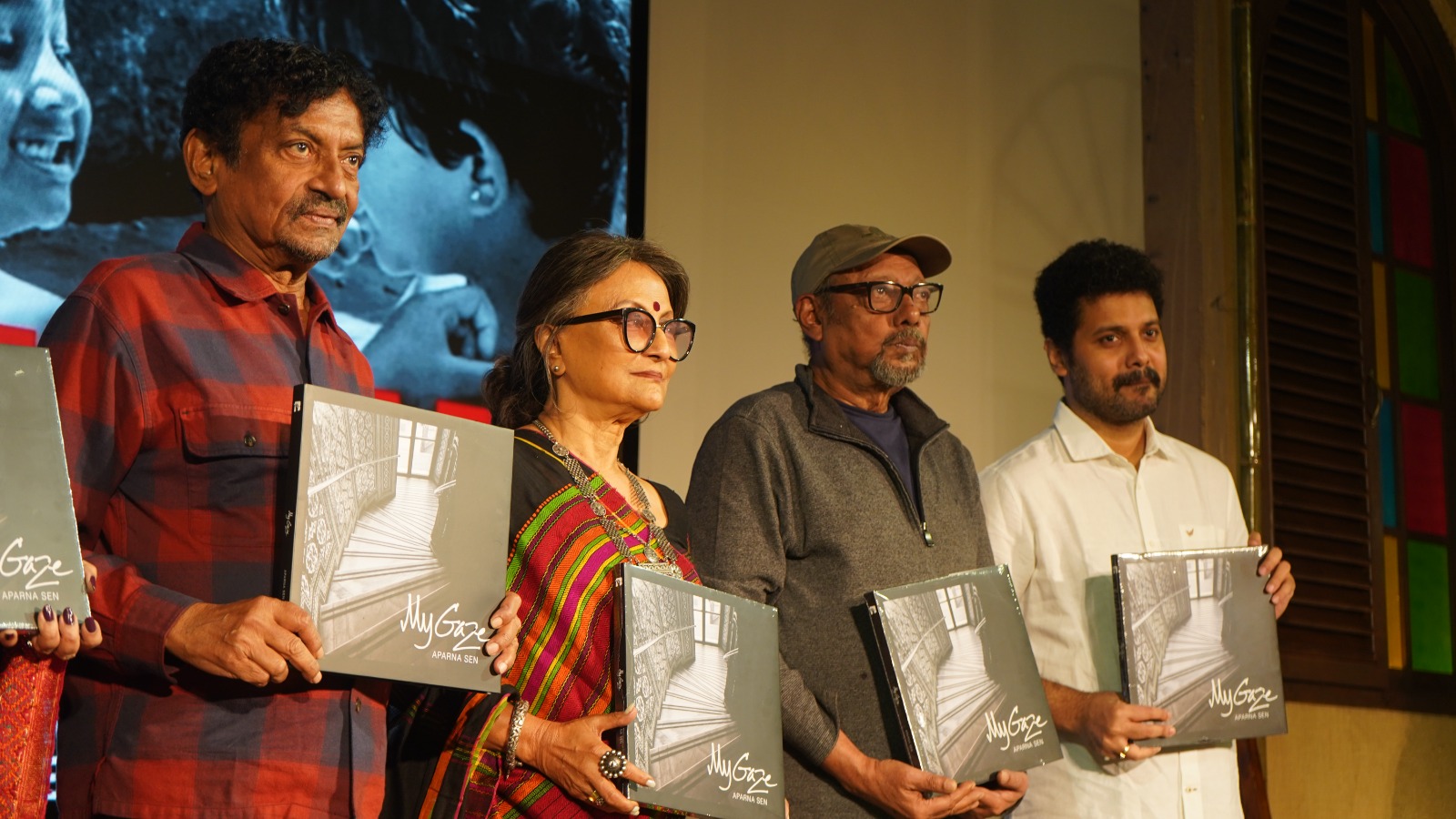
The formal launch of My Gaze, her first photography book, at the Kolkata Centre for Creativity.
Among those present were Gautam Ghose, Anjan Dutt, Barun Chanda, Srijit Mukherji, Debojyoti Mishra, Harsh Neotia, Kalyan Ray, Sudeshna Roy, Moon Moon Sen, Raima Sen, Rituparna Sengupta, artist Shuvaprasanna, Chandril Bhattacharya, Anindya Chatterjee, Debolina Dutta and Ushasie Chakraborty.
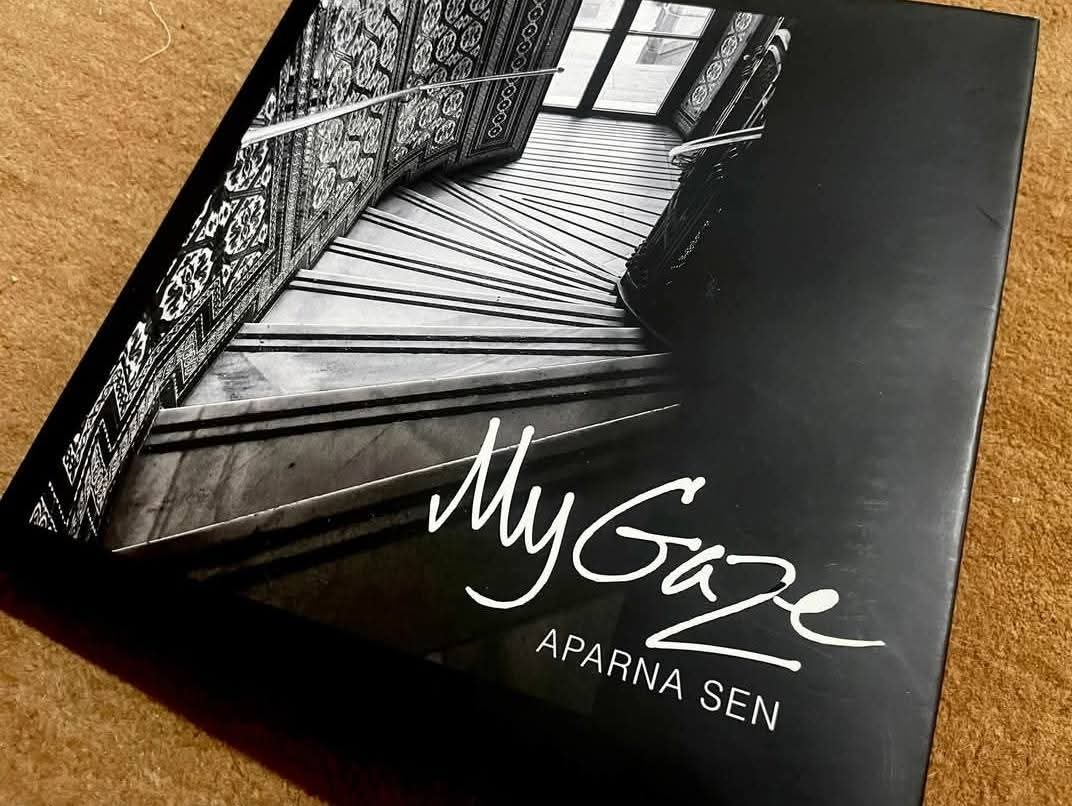
The book cover. Credit: Abhinandan Dutta
Published by Blackletters, My Gaze is a collection of photographs that offers an insight into a lesser-known facet of Aparna Sen's artistic vision. Although widely recognised as an acclaimed actress, filmmaker and editor, Sen has also nurtured a deep interest in still photography over the years. Through this collection, readers get a glimpse of how she views the world around her, capturing people, places, fleeting moments and intimate aspects of everyday life.
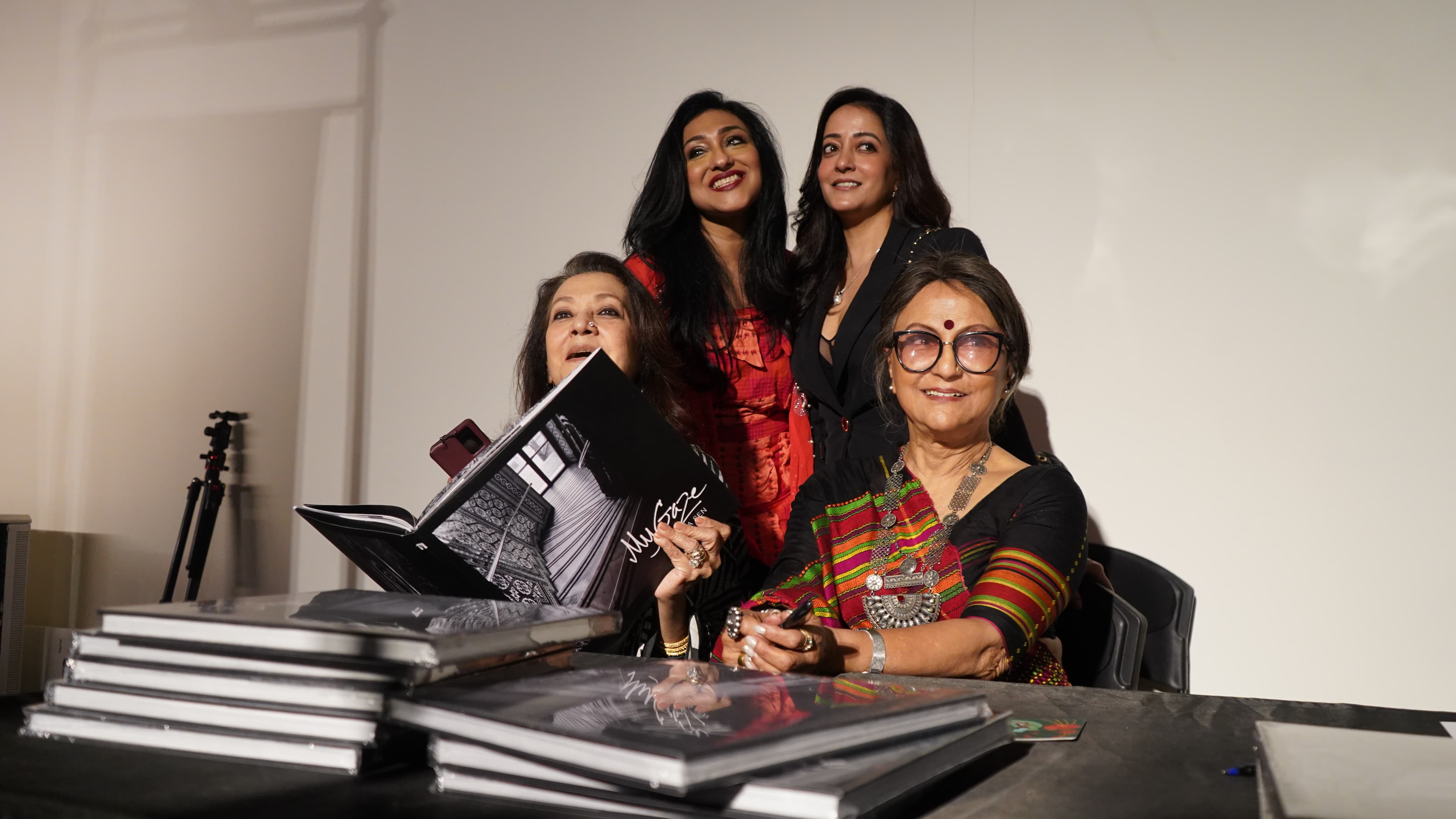
Aparna Sen with Rituparna Sengupta, Moon Moon Sen and Raima Sen at the launch of My Gaze at the Kolkata Centre for Creativity.
A journey through five decades
Sen's journey with photography began in 1976, when she purchased a GAF L-17 camera from the eminent still photographer Subhash Nandi, who had worked on several of Mrinal Sen's films as well as Aparna Sen's 36 Chowringhee Lane. Unfamiliar with the technical aspects of photography, she turned to filmmaker Gautam Ghose, a close friend, to learn the basics of aperture and shutter speed.
Her camera soon became an inseparable part of her life, accompanying her even on outdoor film shoots. Whenever something caught her attention, she would capture it through her lens. Although she lost many of the negatives and prints from the 1970s and 1980s, she continued photographing through the transition from analogue to digital. Sen has observed that while camera technology may evolve, the eye's ability to recognise light and capture the perfect moment remains unchanged.
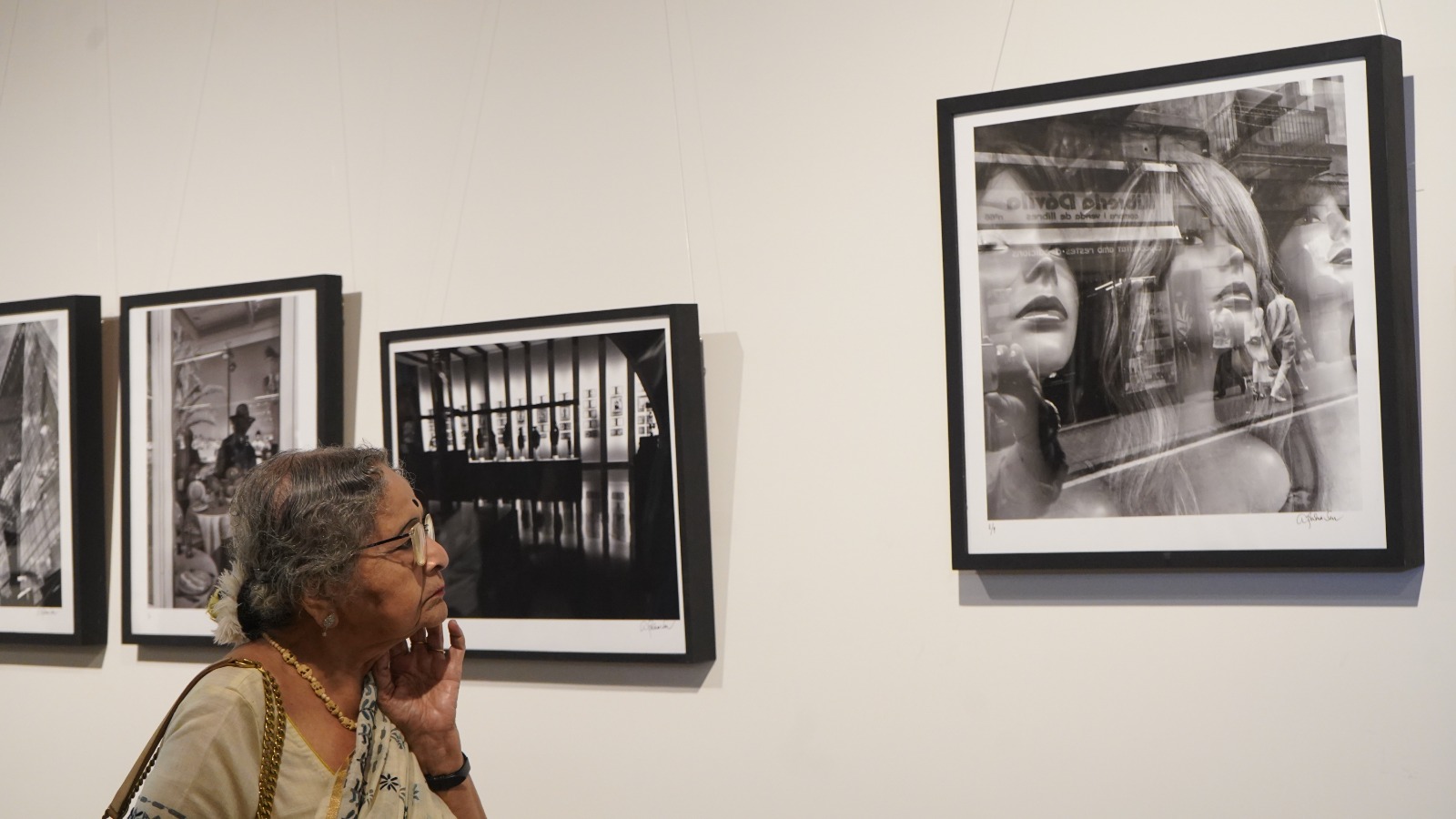
Her works.
My Gaze consists predominantly of black-and-white photographs; however, it is far more than a collection of travel photographs. The exhibition features images from various cities, ports and unfamiliar landscapes, alongside intimate glimpses into her personal life, including photographs of her daughter. It also features an experimental photograph created using the 'day-for-night' technique. Taken at midday, the photograph of a lake has been transformed to evoke the atmosphere of a moonlit night.
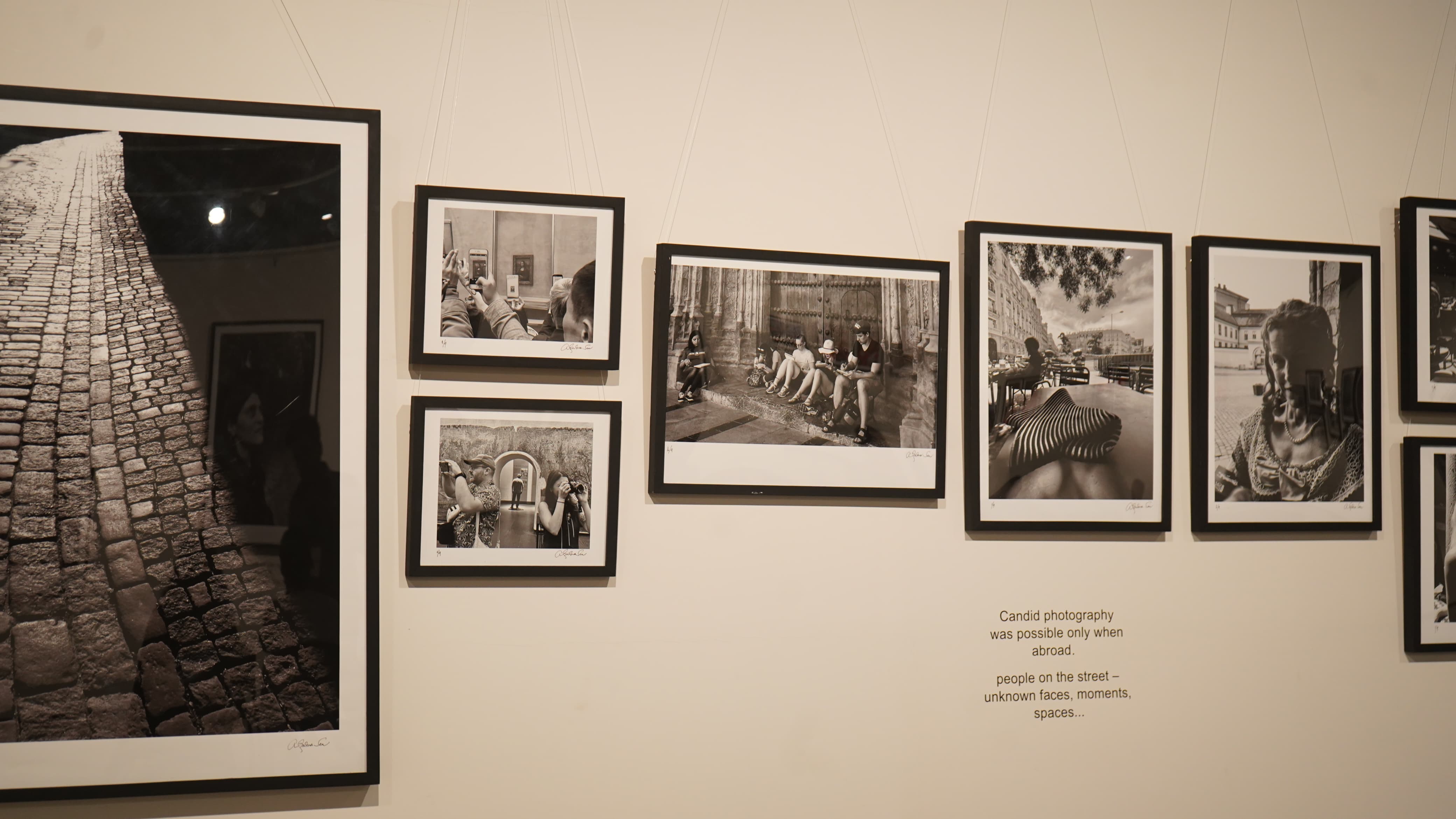
Through her gaze.
The coffee-table book is printed on 170 GSM imported textured paper and features a foreword by the acclaimed poet and lyricist Javed Akhtar. Each photograph is accompanied by a brief personal recollection written by Sen, offering readers a glimpse into the memory or experience associated with that particular frame.
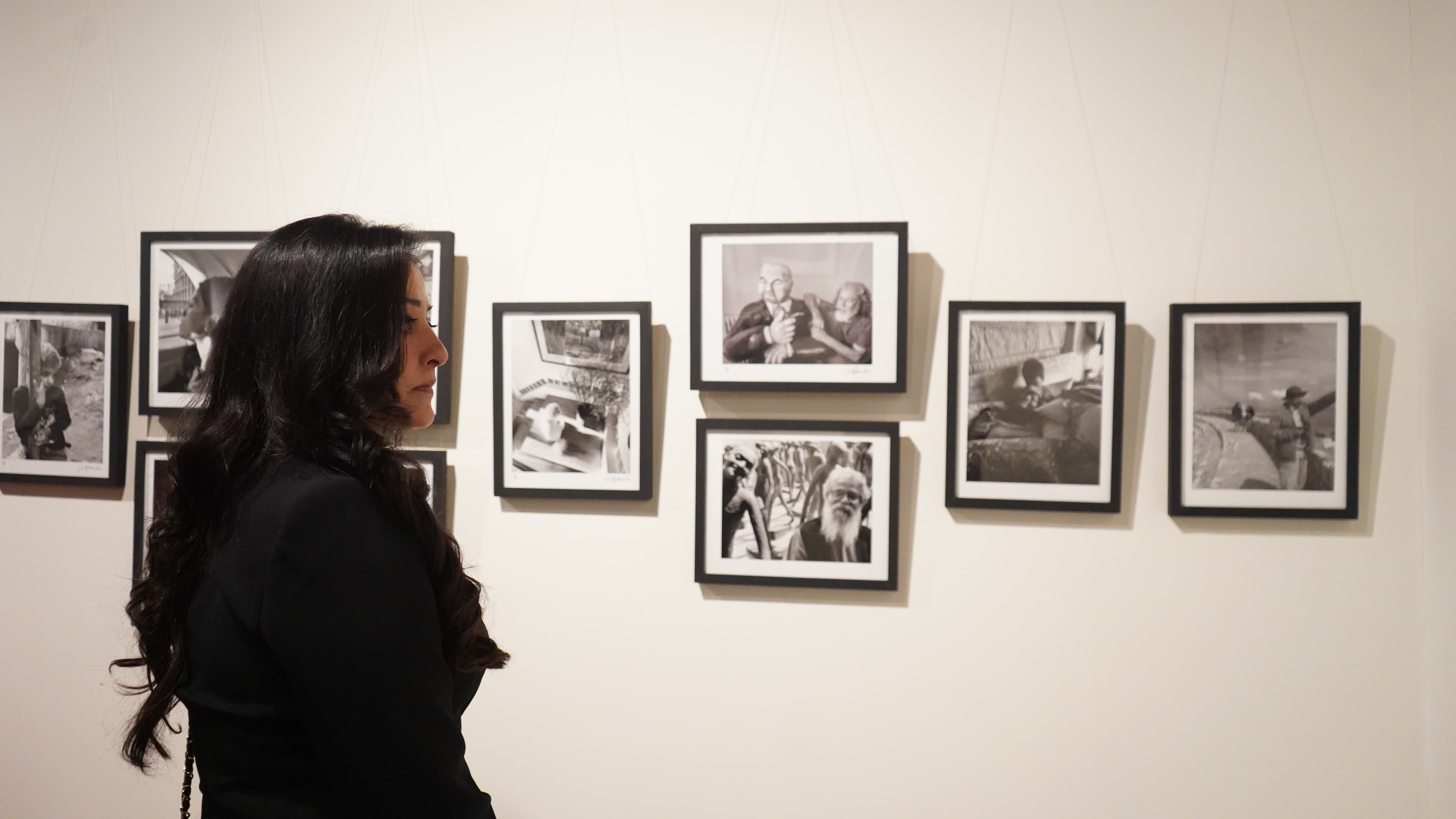
Raima Sen admiring Aparna Sen's work.
What the guests said
Music composer Debojyoti Mishra, after visiting the exhibition and receiving a copy of the book, spoke of his longstanding admiration for Aparna Sen. He recalled following her work since the release of 36 Chowringhee Lane. Mishra also observed that Sen's photographic sensibility had been a source of inspiration in shaping the visual language of films, including the 1981 classic.
According to him, My Gaze is much more than a collection of photographs; it is a record of a particular period and a visual documentation of Aparna Sen's artistic journey. He further observed that, at a time when Sen is not making films as frequently, this visual documentation of her creative world is particularly significant. Praising the quality of the book's printing and production, he described the exhibition as an experience he would remember for a lifetime and the book as a valuable addition to his collection.
Filmmaker Sudeshna Roy recalled her long association with Aparna Sen. She spoke of interviewing Sen for the first time as a journalist in the early 1980s and subsequently working as her assistant at Sananda. Roy also reflected on the meticulous attention to detail that characterises Sen's approach to photography.
According to Roy, Sen does not simply take photographs by clicking the shutter. Her careful consideration of framing and light, combined with her distinctive way of seeing the world, lends her still photographs an almost cinematic quality.
Roy also shared some insights into the making of the book. She recalled how Sen spent hours at Santiniketan, working alongside Sanjit, going through an extensive collection of photographs and selecting the ones that would eventually find a place in the book. Sen also approached the captions with considerable thought and sensitivity, writing brief recollections to accompany each photograph. Having witnessed the long process through which the book gradually took shape, Roy said she felt privileged to have been part of the journey.
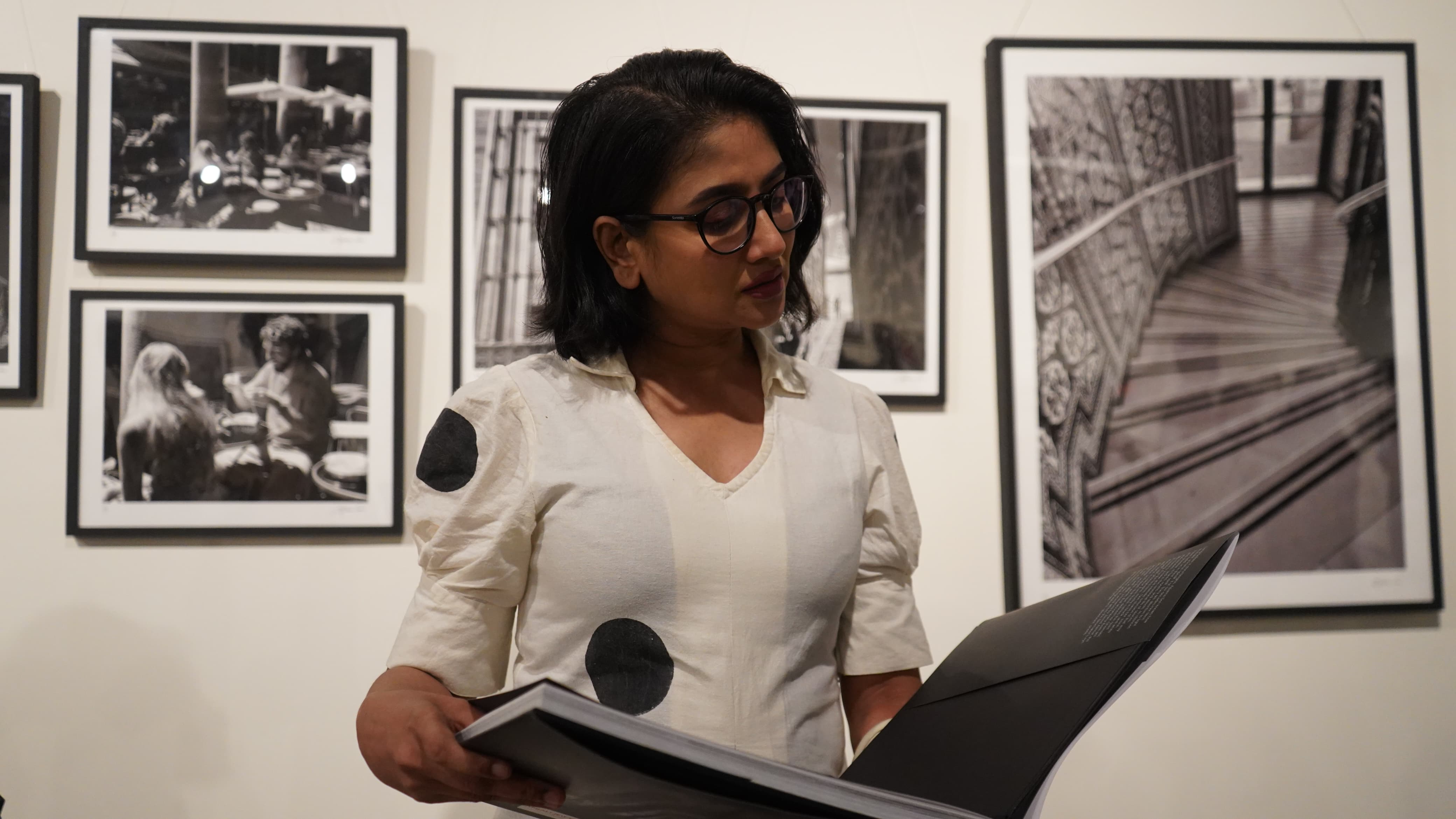
Actress Debolina Dutta takes a closer look at Aparna Sen’s photographs in My Gaze, exploring the visual world captured in her first photography collection.
Actress Debolina Dutta, too, expressed her admiration for the collection. While Aparna Sen's work as an actor and filmmaker has always fascinated her, she believes My Gaze reveals something more personal about Sen: the way she perceives and interprets the world around her. She feels that the sensibility reflected in these photographs can enrich the imagination of anyone with an appreciation for art, making the book a treasured possession.
The making of ‘My Gaze’
Speaking on behalf of the publisher, Arka Deb, Editor-in-chief of Blackletters, said that being associated with a project of this stature was both an honour and a responsibility. Allcap Communication played an important role in developing the book's visual design and overall aesthetic presentation.
Techno India, Anjali Jewellers and Chowman extended their support to the publication. Aparna Sen expressed her gratitude to the sponsors, Mansi Roy Chowdhury, Ananya Chowdhury and Debaditya Chaudhury, head of Chowman, for supporting the project.
Aparna Sen's first solo photography exhibition at the Kolkata Centre for Creativity will remain open to visitors until December 9.
My Gaze is available for purchase through the Blackletters website.

